
Dental Implant Failure & Salvage Greenwood Village
Help Your Smile Bounce Back
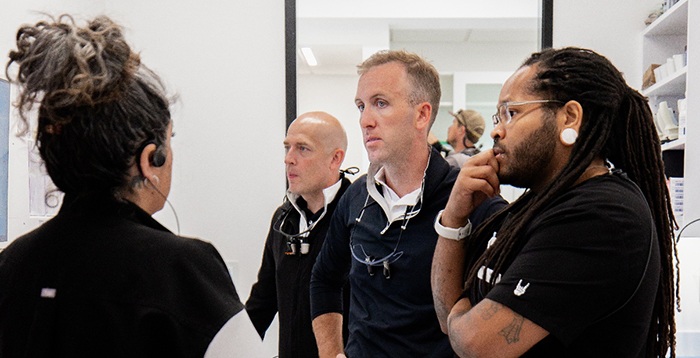
Dental implants boast a high success rate, and they often last for many decades without any problems. You should not be overly worried that your new teeth will run into serious trouble. However, it is still important to be aware that, in certain cases, issues develop that can lead to dental implant failure. If you start to notice strange symptoms around one of your prosthetic teeth, contact our Greenwood Village team immediately. You can rely on us to thoroughly evaluate the problem and help you plot a course to recovery.
Why Do Dental Implants Fail?
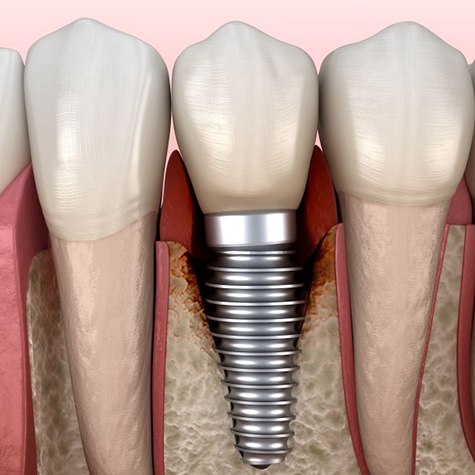
When dental implants fail, it is most commonly due to an infection called peri-implantitis. It occurs when harmful bacteria accumulate along the gums and start to attack the tissue around an implant. Eventually, it can cause so much damage that the implant is no longer well-supported. Mistakes in oral hygiene can contribute to peri-implantitis, but other factors may also come into play.
Aside from peri-implantitis, dental implant failure might occur if:
- You have an underlying medical condition that prevents the implants from bonding properly with your jawbone.
- You sustain an oral injury.
- You engage in severe teeth grinding and clenching.
At Landmark Dental Studio, we strive to identify risk factors ahead of time so you can take proactive steps to protect your new smile.
Symptoms of a Failed Dental Implant

Dental implant failure can occur at any time, even months or years after the initial placement surgery. We encourage you to monitor your oral health so you can identify unusual symptoms in their early stages.
Here are some indications that merit a call to our office:
- Unusual or severe pain: After you heal from dental implant placement surgery, you should not feel any pain. Severe or unusual discomfort should always be professionally assessed.
- Difficulty chewing: Once you adapt to your implants, they should provide easy and powerful chewing ability. Challenges in this area constitute a big red flag.
- Signs of infection: Redness, swelling, pus, gum recession, and bad breath could all point to peri-implantitis.
- Looseness: A loose-feeling implant may stem from a problem with the implant post itself or the attached restoration.
How Dental Implant Salvage Works
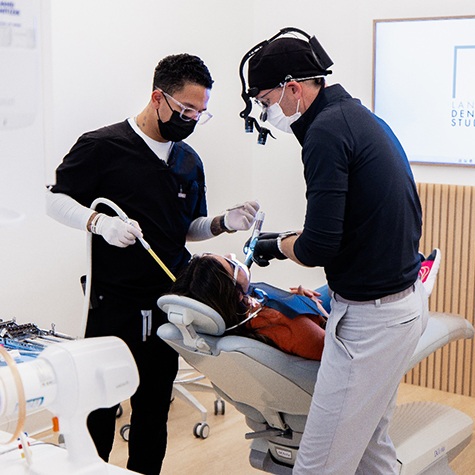
When you arrive for your appointment, our team will ask about your symptoms and perform a thorough examination. After we identify the problem, we can discuss your options. In some cases, a relatively simple solution is all that is needed. Antibiotics or a new restoration might adequately address the issue.
In other situations, more extensive care is required. It might even be necessary to remove the failing implant altogether. After a healing period and any necessary restorative care, you may be able to receive a new one.